
Getting Decatur County Court Records
Where you send the request depends on the court. Circuit Court Clerk Kelly Harden keeps the Circuit, Criminal, and General Sessions records; call 731-852-3125. Chancery and probate-related files sit with Clerk and Master Elizabeth J. Carpenter. Reach her at 731-852-3422 or elizabeth.carpenter@tncourts.gov. Both offices list PO Box 488, Decaturville, TN 38329, and county materials place the courthouse at 22 West Main Street.
- Name the exact court and custodian.
- Give the case number, a narrow date range, and the specific record.
- Choose inspection, plain copies, certified copies, or a combination.
- Ask about available delivery methods, current fees, identification requirements, and turnaround.
- Request an estimate before copies are produced and keep the clerk's response.
Statewide guidance recognizes both phone and in-person inspection requests. Copies may call for a written request or an agency form. If mail, email, or fax is your preferred route, confirm the clerk accepts that channel first.
Decatur County Docket Versus Court File
Docket or register: the chronological list of filings, settings, orders, and procedural events under a case number.
Case file: the pleadings, notices, orders, exhibits, and other documents maintained for the matter, subject to access limits.
Certified copy: a clerk-authenticated reproduction, often bearing certification or seal, requested separately from ordinary inspection.
A public docket line does not promise a public PDF. The entry may say when an order was filed yet never show its contents. Someone who only needs the sequence of events may skip the underlying pleadings entirely, so naming the layer you want saves delay and avoids needless copy charges.
Court Record Types
Circuit and General Sessions files can hold a wide mix. Civil complaints, criminal filings, citations, motions, notices, judgments, and setting records all appear there. Chancery and probate-related files can hold petitions, estate documents, appointments, inventories, accountings, divorce or trust filings, and orders. Sensitivity and legal restrictions vary by matter.
Municipal court files are their own world. They include citations, ordinance allegations, settings, pleas, judgments, fines, continuances, and payment entries. For Decaturville records, ask Christian Anglin at 731-852-2034. Parsons records go to Judy Daugherty at 731-847-6358. Scotts Hill records go to Brittney McCord at 731-549-3175. Federal district and bankruptcy cases sit with separate federal clerks and PACER.
Decatur County Records Under Rule 34
Tennessee Supreme Court Rule 34 sets out the public's access to court records, and that official rule page spells out the standards.
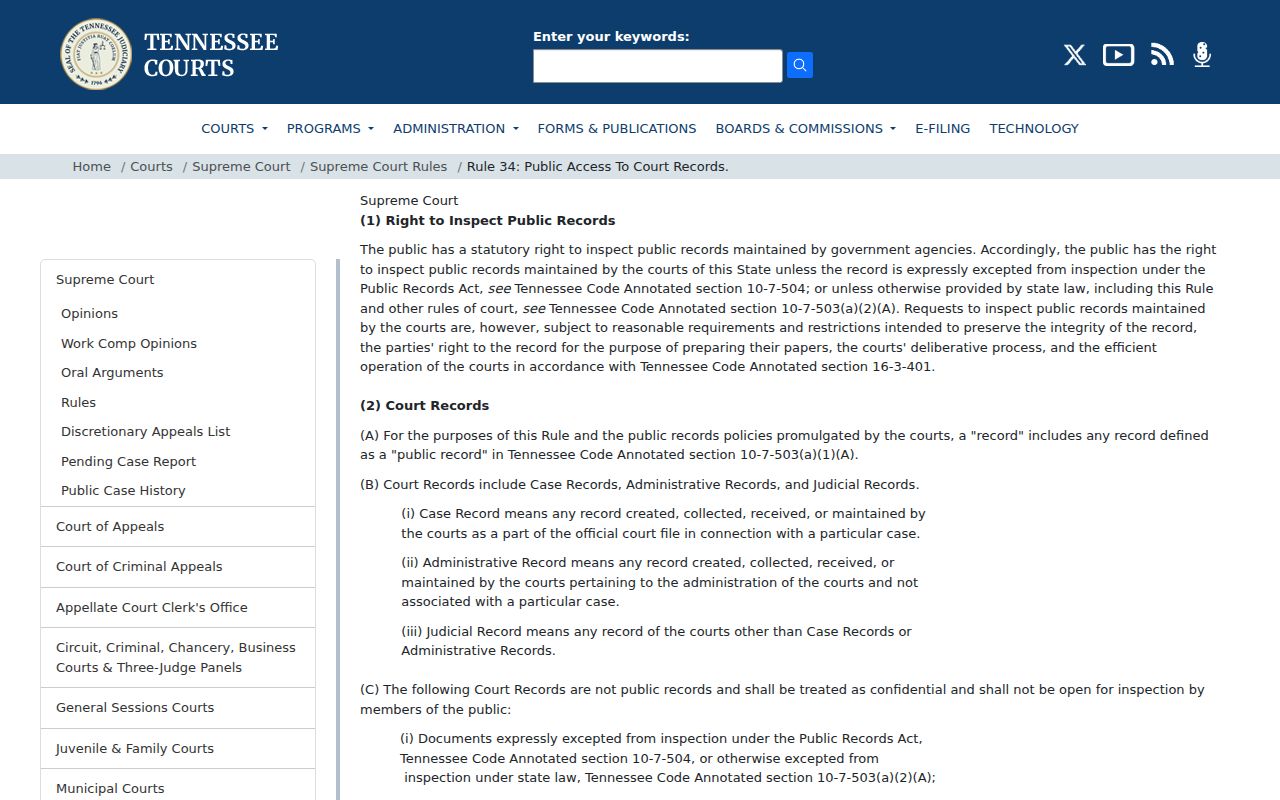
The rule presumes records are open to inspection. That presumption answers to the Tennessee Public Records Act, other law, and court rules, and it does not put every item online. Sealed documents, protective-order material, unpublished drafts, judge copies, internal conference or deliberative records, internal case-management material, recusal information, and records whose release would frustrate a judicial function can all stay closed.
Inside Decatur County Court Records
A docket can list the case number, filing date, division, caption, parties, attorneys, event dates, setting information, disposition, costs, and related-case references. The file behind it may hold the complaint or petition, answer, motion, response, service return, notice, signed order, judgment, or appeal papers. The exact fields in a redacted Decatur file vary by case.
| Chronology | Dated entries showing procedural activity. |
|---|---|
| Setting data | Date, time, courtroom, judge, and hearing type when publicly shown. |
| Document status | Whether an item is filed, linked, sealed, redacted, or available only by request. |
| Outcome | Disposition and date, with the actual order requested when its terms matter. |
| Related record | Appeal, transfer, companion, consolidation, or reopened number. |
Entries record procedural facts, nothing more. An allegation in a complaint or charge is not proof, and a dismissal is not a conviction or judgment.
Decatur County Has Different Custodians
The Decatur County Clerk page shows a distinction that trips up many requesters: the county clerk and the court clerks are separate offices with separate records.
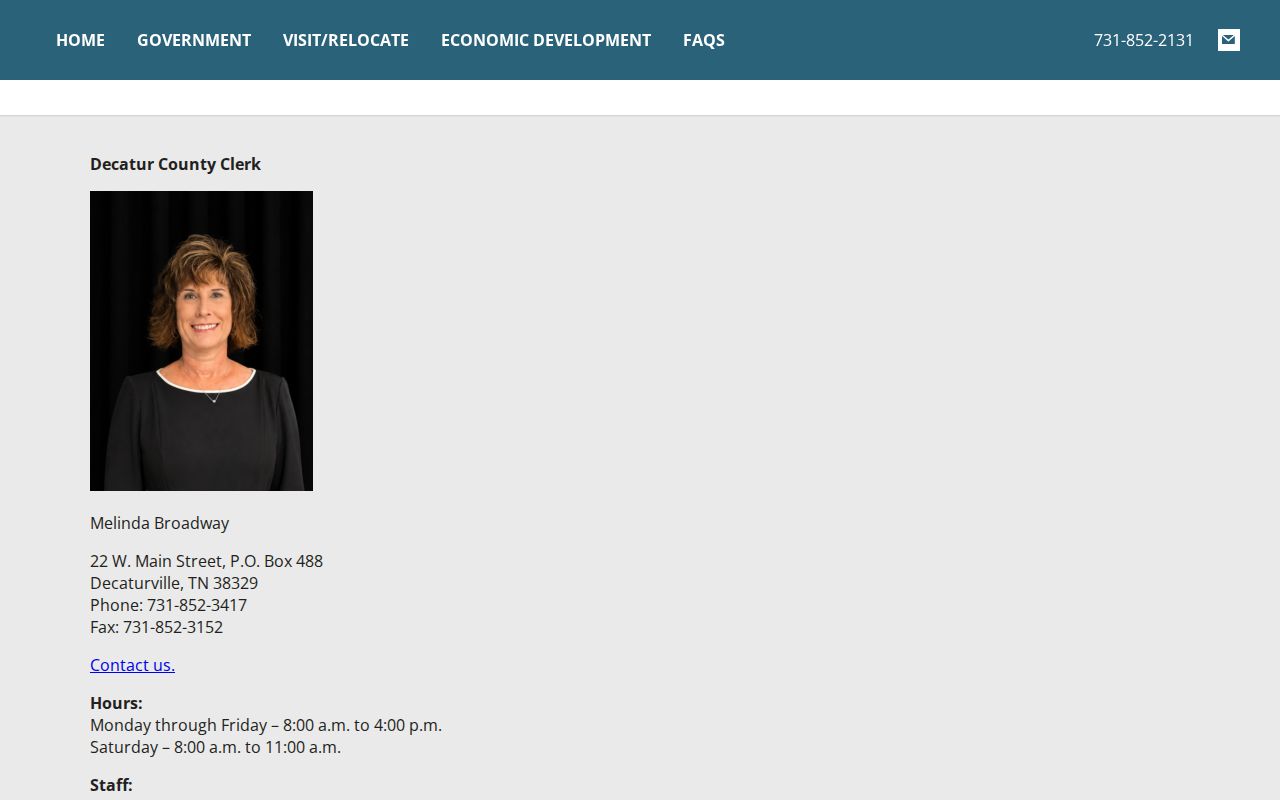
The Register of Deeds is distinct too. It may record an instrument or judgment. But the originating court clerk keeps the docket and the order itself. Contact both only when your question truly spans the court's action and the later recording. Send a court-file request to the wrong office. You may get an accurate "not held here" answer that resolves nothing.
Fees and Certified Copies
Decatur County posts no official local schedule of court-copy, certification, search, scanning, postage, or document-image fees. Ask the clerk for a quote before production. An older official Comptroller or TACIR appendix lists 50 cents per page for certain court copies and $5 for certification and seal in listed categories. Treat that as a reference schedule, not proof of the current Decatur charge.
The Tennessee Open Records Counsel FAQ offers general reasonable-copy references. It lists 15 cents for standard black-and-white pages and 50 cents for color, subject to production-cost rules. Court-specific statutory fees can differ. CourtFeePay amounts are case payments, not records fees.
Ask before ordering. State whether the copy must be plain or certified, whether a seal is needed, how it will be delivered, and whether labor, postage, or scanning charges apply.
Decatur County Historical Court Records
The Decatur County Library holds court minutes, wills, deeds, old courthouse records, newspapers, and microfilm. Its collection can carry a docket search back generations.
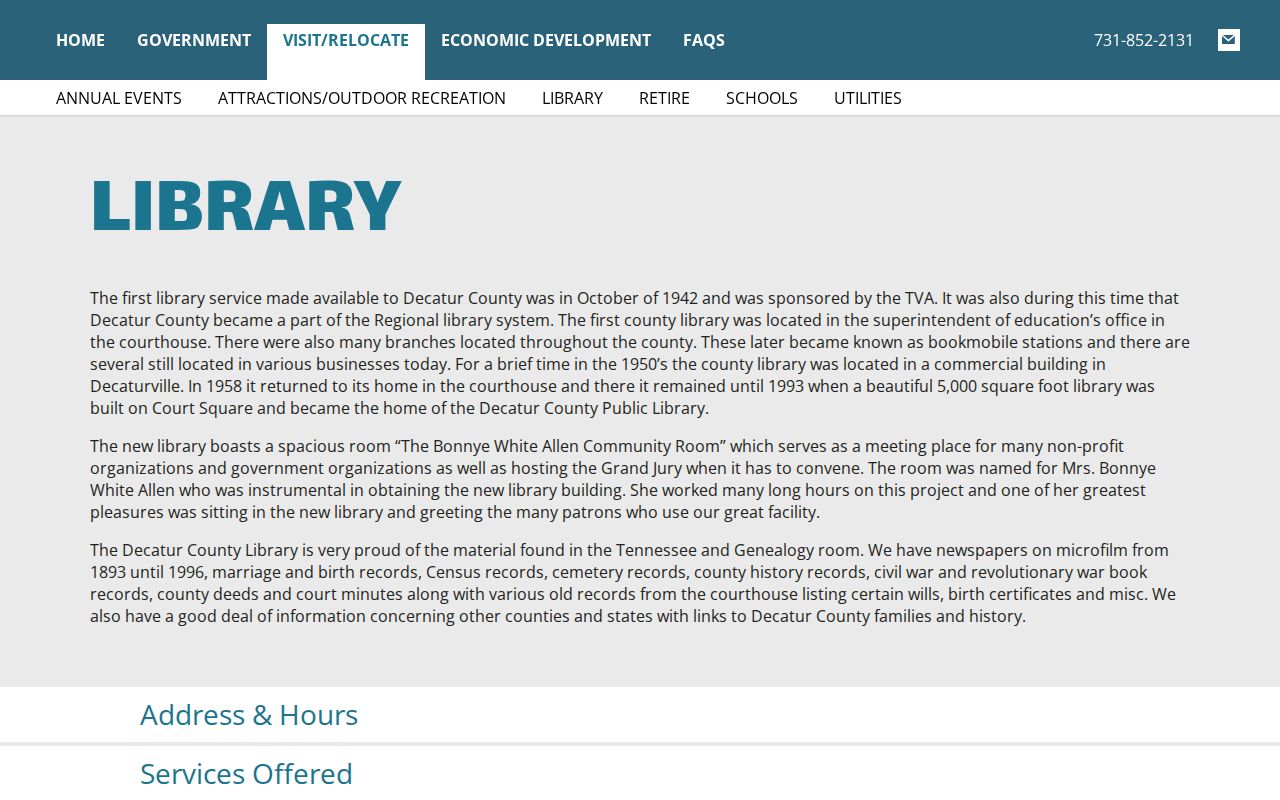
Old records here need extra patience. Local history reports courthouse fires in 1869 and 1927, with losses among older records. The Decaturville historical resource adds courthouse and community context to that story.
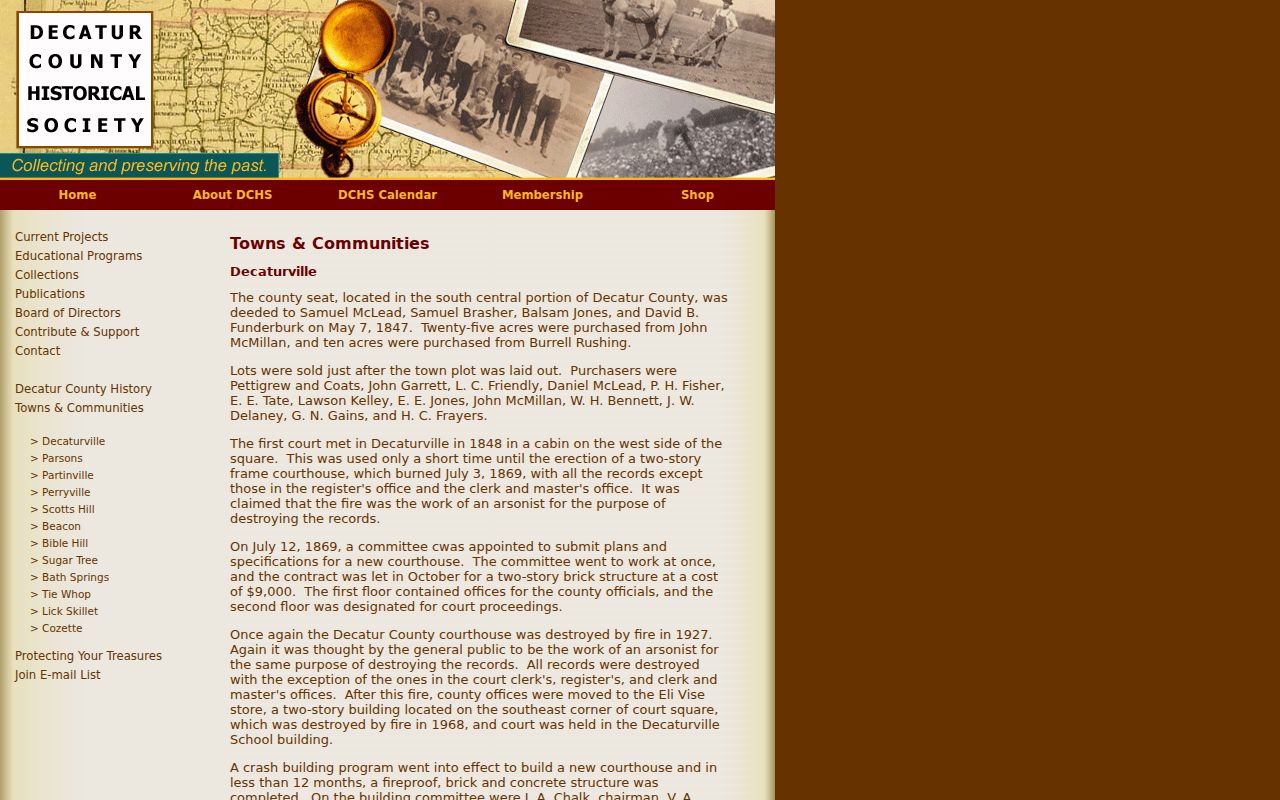
For older research, ask the library which series and years survive. Then check with the current custodian and other archival repositories. A library copy or historical transcription can be useful evidence, but it is not automatically a clerk-certified record.
Sealed Records and Public Access
Not every record in a Decatur County court file is open to you. Juvenile files, sealed or protective-order records, legally confidential documents, internal judicial material, and sensitive family or medical information can all be restricted. Even when a docket line is public, that says nothing about the underlying document. Federal files follow their own redaction rules. Those cover Social Security and tax-identification numbers, birth dates, minor names, financial-account numbers, and criminal home addresses.
If someone refuses you access, get the legal basis in writing. Ask whether a public redacted version exists. Do not press a clerk to reveal protected information. Keep in mind that expungement works differently from sealing. It removes charge data outright, so no visible sealed label ever appears on the record.
Make a Precise Decatur County Request
Tennessee has no single statewide records repository. The Public Records Act sends each request to the entity believed to hold the record. Citizens of Tennessee hold statutory rights to inspect and copy, subject to exceptions and agency policies, and an office may ask for qualifying identification under applicable conditions. Inspection alone generally carries no charge unless a law authorizes one. Copies, though, can carry reasonable or statutory costs.
A tight request gets better results. Give the court, custodian, case number, narrow date range, specific record, copy type, and delivery preference. Useful phrasings include the public docket or register from filing through disposition, the order entered on a stated date, or a certified copy of a named document. An open-ended question buys you nothing. The custodian has no duty to sort through files or build a new compilation for you.
No online form means call first. Confirm the accepted request channel, current fee, identification policy, available format, payment method, and expected production time before mailing money or original papers.
Scotts Hill publishes its own municipal public-records policy. It also offers a request or response form for city-held records. That process stops at the city line, so it does not control county Circuit or Chancery files. Rule 5B has a similar limit. It permits e-filing when authorized but sets up no public access to electronically filed Decatur documents. Match each request to the particular court's current practice.